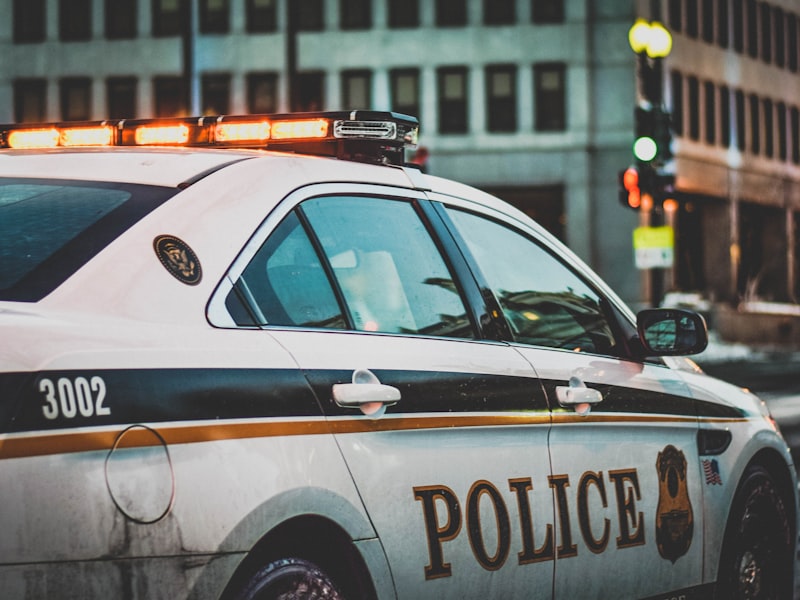
You Won't Believe These 10 Strange American Laws Are Still Legal
Did you know that in Texas, trying to legally sell your own eyeballs could literally land you in the slammer? If you thought the legal system was all boring paperwork and serious gavels, you are sorely mistaken.
The United States is a massive patchwork of local ordinances, outdated statutes, and bizarre laws that were created to solve highly specific, often ridiculous historical problems. While most of our legal codes make perfect sense, there are quite a few strange American laws lurking in the books that sound completely made up.
Whether they are relics of a bygone era or the result of a very bizarre local dispute, these unusual laws prove that reality is always stranger than fiction. Grab your favorite snack (and maybe leave your bear-wrestling gear at home) as we dive into some of the most ridiculous legislation still recognized in America today.
10 Strange American Laws You Won't Believe Exist
1. You Are Not Allowed to Pump Your Own Gas
Location: New Jersey
If you are taking a road trip through the Garden State, you better keep your hands off the fuel pump. New Jersey is currently the only state in the country where it is completely illegal for drivers to pump their own gasoline.
This unusual law dates back to the Retail Gasoline Dispensing Safety Act of 1949. Back then, lawmakers argued that pumping gas was a massive fire hazard and that average citizens simply couldn't be trusted to handle explosive fluids. The legislation also effectively protected local gas station attendants' jobs.
For decades, Oregon shared this quirky rule, but they recently loosened their restrictions, leaving New Jersey as the sole champion of full-service fuel. If you try to top off your own tank today, you could technically be slapped with a fine of up to $500.
Source: New Jersey Stat. Ann. § 34:3A-4
2. Carrying an Ice Cream Cone in Your Back Pocket is Prohibited
Location: Kentucky
You've probably never felt the urge to store your dessert in your pants, but if you do, make sure you aren't standing in Kentucky. According to a widely cited, incredibly outdated law, stashing an ice cream cone in your back pocket is forbidden.
The historical context here is actually fascinating. Back in the days when horseback riding was the primary mode of transportation, clever horse thieves used a very specific trick. They would slip a melting ice cream cone into their back pocket and casually walk away. The sweet-toothed horses would naturally follow them home.
By using this sugary loophole, the thieves could claim the horse simply followed them, allowing them to avoid a horse-stealing charge. While nobody is stealing horses with dairy products today, this hilarious statute remains one of the most famous outdated laws on the books.
Source: Historical Kentucky Statutes / Local Ordinances
3. Eating Fried Chicken With a Fork is a Crime
Location: Gainesville, Georgia
Table manners are highly respected in the South, but in Gainesville, Georgia, eating fried chicken with utensils is considered an insult to local culture. In fact, it is a municipal offense to eat the beloved dish with anything other than your bare hands.
Gainesville proudly calls itself the "Poultry Capital of the World." To honor their booming chicken industry, local officials passed this deeply specific ordinance in 1961 as a public relations stunt. The law officially decrees that fried chicken is a culinary delicacy that must be consumed strictly via the "digital method" (meaning your fingers).
While mostly symbolic, the local police do occasionally enforce it for a laugh. If you ever visit this poultry paradise, leave the silverware on the table to avoid raising any legal eyebrows.
Source: Gainesville City Ordinance, 1961
[CALLOUT_START] Fun Fact: The Gainesville chicken law isn't just an urban legend! In 2009, a 91-year-old tourist named Ginny Dietrick was jokingly "arrested" by the local police chief while dining at a local restaurant. She was caught red-handed using a fork on her chicken, though she was quickly pardoned by the mayor. [CALLOUT_END]
4. Bingo Games Cannot Last Longer Than Five Hours
Location: North Carolina
Bingo might seem like an innocent pastime for church basements and retirement communities, but North Carolina lawmakers take it incredibly seriously. In this state, any single session of bingo is strictly legally capped at five hours.
The state regulates bingo to prevent illegal gambling rings from using the harmless game as a front for massive, unregulated casinos. By putting a hard time limit on the fun, the government ensures that nobody is spending their life savings on a high-stakes, multi-day bingo bender.
The law also stipulates that you cannot host more than two bingo sessions in a 48-hour period. So, if you are planning a hardcore, weekend-long bingo marathon in North Carolina, you might want to consult a lawyer first.
Source: North Carolina Gen. Stat. § 14-309.8
5. Bear Wrestling Matches Are Strictly Outlawed
Location: Alabama
If your weekend plans involved stepping into the ring with a 600-pound apex predator, you will need to find another hobby in Alabama. The state explicitly makes the "exploitation of a bear" a serious criminal offense.
Believe it or not, bear wrestling was a massive novelty craze in the 19th and 20th centuries. Traveling carnivals would bring out declawed, muzzled bears and challenge brave (or heavily intoxicated) locals to pin the animal for a cash prize. It was cruel, dangerous, and incredibly popular.
Animal rights advocates fought hard to end the bizarre spectacle. In 1996, Alabama passed a comprehensive law that not only outlawed bear wrestling matches, but also banned promoters from charging admission to witness such an event.
Source: Alabama Code § 13A-12-5
6. Honking Near a Sandwich Shop After 9 PM is Illegal
Location: Little Rock, Arkansas
Late-night sandwich cravings are completely natural, but aggressively blasting your car horn to get your food is not tolerated in Little Rock, Arkansas. The city has a surprisingly specific noise ordinance that targets hungry, impatient drivers.
According to the local municipal code, it is unlawful to sound a vehicle horn "at any place where cold drinks or sandwiches are served after 9:00 p.m." This unusual law was likely enacted during the golden age of drive-in diners.
Carhops were running food straight to vehicles, and teenagers would constantly honk to get the waitress's attention. To protect the sanity of nearby residents trying to sleep, the city banned the honking. Today, the law remains fully active, even if drive-in diners are a thing of the past.
Source: Little Rock Code of Ordinances Sec. 18-54
7. Selling Your Own Eyeballs is a Class A Misdemeanor
Location: Texas
The human body is amazing, but if you ever decide to liquidate your personal biological assets, cross Texas off your list. The Lone Star State has a highly descriptive statute that forbids the sale of human organs, specifically calling out eyes.
While banning organ trafficking makes total sense, the law goes out of its way to note that you cannot sell organs for valuable consideration, even if they belong to you. This includes your heart, kidneys, liver, skin, and yes, your eyeballs.
Donating your organs to save a life is perfectly legal and encouraged. However, trying to put your spare eye up on an online auction block will net you a Class A misdemeanor, complete with hefty fines and potential jail time.
Source: Texas Penal Code § 48.02
8. Sharing Your Streaming Passwords is a Criminal Offense
Location: Tennessee
Long before Netflix officially started cracking down on password sharing, the state of Tennessee made it an actual criminal offense. If you let your friends use your login for an entertainment subscription service, you could technically be breaking the law.
Passed in 2011, this modern but bizarre law was initially pushed by the recording industry to stop music hackers from stealing and bulk-selling subscription passwords. However, the language of the bill was written so broadly that it covers essentially all entertainment subscription services.
If someone steals and sells thousands of logins, it is a felony. But even casually giving your login to a buddy could theoretically be classified as a misdemeanor. Luckily, Tennessee police aren't currently raiding homes over shared streaming accounts.
Source: Tennessee Code Ann. § 39-14-104
9. Buying a Car on Sunday is Strictly Forbidden
Location: Indiana
Weekends are typically the best time to shop for a new ride, but car dealerships in Indiana are legally forced to keep their lots closed on Sundays. If you want to kick the tires on a new sedan, you better do it by Saturday evening.
This rule is a surviving example of a "Blue Law"—historical legislation designed to restrict commerce and enforce a day of rest for religious reasons. While most states have abandoned these rules entirely, Indiana maintains its grip on Sunday auto sales.
Dealership owners themselves are often split on the issue. Some want the freedom to sell seven days a week, while others appreciate having a guaranteed day off for their staff without losing ground to local competitors.
Source: Indiana Code § 24-4-6-1
10. Riding a Horse While Intoxicated is a Traffic Violation
Location: Colorado
Think a DUI only applies to cars, trucks, and motorcycles? Think again. In Colorado, the state supreme court has ruled that riding a horse while under the influence is a punishable traffic infraction.
Because horses are heavily ridden on public trails and roads in this mountainous state, traffic laws explicitly define horses as a form of non-motorized transportation. If you are visibly intoxicated while steering a horse, you pose a danger to pedestrians, vehicles, and the animal itself.
While you won't lose your driver's license over a drunken horseback ride, you can still be hit with a painful fine and heavily reprimanded. The lesson here? Always designate a sober equestrian.
Source: Colorado Revised Statutes § 42-4-1301
Conclusion
From illegal ice cream pocket-stashing in Kentucky to the strict five-hour bingo limits of North Carolina, the American legal code is an absolute goldmine of comedy. These strange American laws remind us that the legal system is deeply human—and sometimes humans make really weird rules to solve highly specific problems.
Next time you hit the road, you might want to double-check local ordinances before you do something crazy, like eating fried chicken with a fork or buying a car on a Sunday.
Do you know of a wild, outdated law from your hometown? Dive into our weird laws by state archives to find more bizarre rules, or submit your favorite strange statute to us!
Frequently Asked Questions About Strange American Laws
Q: Are these strange American laws actually enforced? A: It depends entirely on the law! Statutes like the ban on pumping your own gas in New Jersey or the Sunday car sales ban in Indiana are strictly enforced. However, outdated laws like the ice cream cone rule in Kentucky are practically never enforced and remain on the books merely as historical oddities.
Q: Why do states keep bizarre laws on the books? A: Getting a law repealed takes time, money, and legislative effort. Lawmakers usually prioritize pressing modern issues over cleaning up harmless, outdated laws from a century ago, allowing these strange American laws to stick around indefinitely.
Q: Can I really be arrested for eating fried chicken with a fork? A: In Gainesville, Georgia, the law is real, but it is treated as a fun local joke rather than a strict criminal mandate. Any "arrests" made by the local police for this offense are purely for public relations and a good laugh.
Disclaimer: The laws featured in this article are presented for entertainment purposes only. While we strive for accuracy, laws change frequently and vary by jurisdiction. Nothing on WeirdLaws.us constitutes legal advice. Always consult a qualified attorney for guidance on any legal matter.
Discover Weird Laws
Loved reading about the history of weird laws? Check out some of these bizarre statutes currently in our database: